The ability to effectively use comer past tense conjugations is crucial for anyone striving to achieve proficiency in Spanish. Understanding the nuances of the comer preterite conjugation can significantly enhance one’s ability to communicate about past events with clarity and accuracy. This guide aims to shed light on the various forms of comer, exploring both its preterite and other conjugations. By delving into these linguistic structures, learners will be better equipped to navigate the complexities of Spanish tenses.
Understanding the comer preterite conjugation
Definition and usage of the preterite tense
The preterite tense in Spanish is used to describe actions that have been completed in the past. It is distinct from other past tenses, as it focuses on the definitiveness of the action. For instance, when utilizing the comer preterite conjugation, one might say “comí” to indicate that the act of eating was concluded at a specific point in time. This tense is essential for narrating past events succinctly.
Comer preterite forms in different pronouns
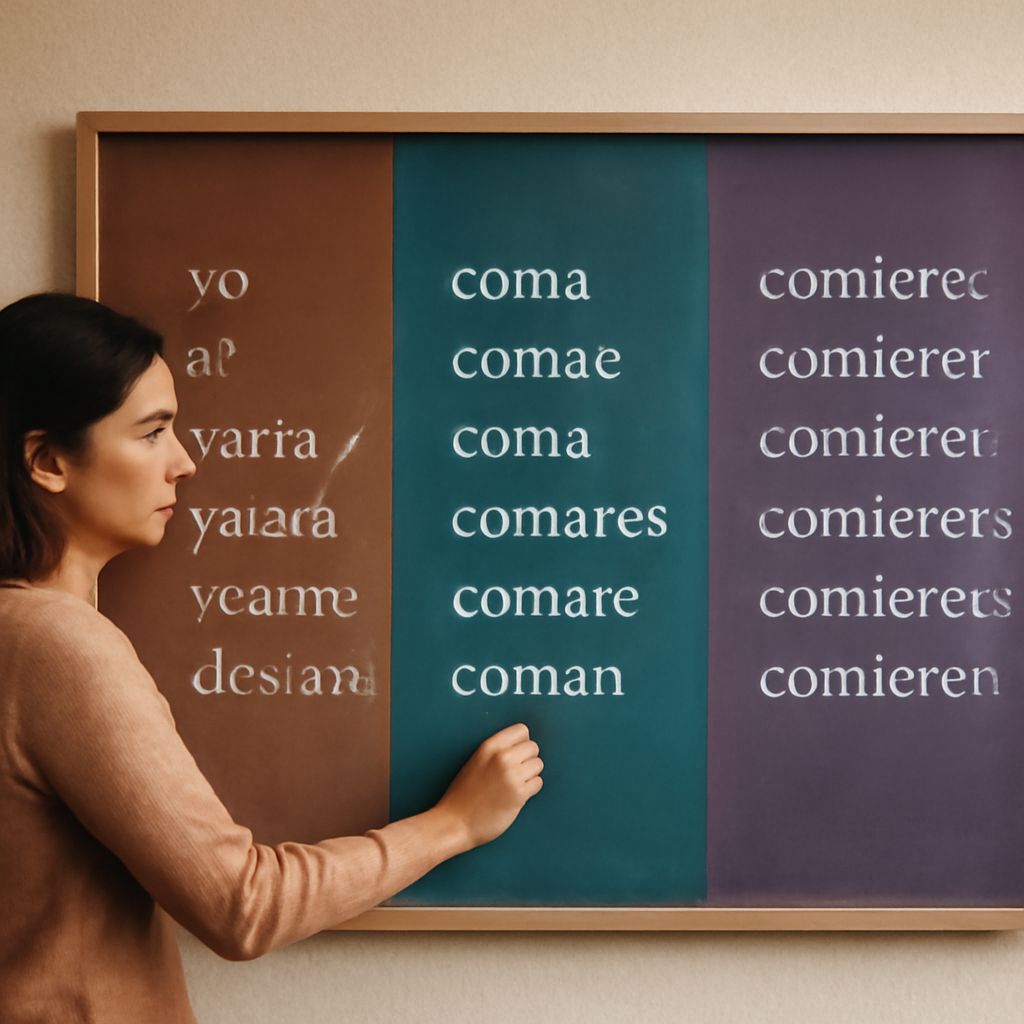
Conjugating comer in the preterite tense requires attention to detail in relation to pronoun usage. Here are the forms:
- Yo: comí
- Tú: comiste
- Él/Ella/Usted: comió
- Nosotros/as: comimos
- Vosotros/as: comisteis
- Ellos/Ellas/Ustedes: comieron
Each form corresponds to a specific subject pronoun, enabling precise communication about past occurrences.
Comparing comer past tense with other tenses
Differences between preterite and imperfect
While the preterite tense indicates completed actions, the imperfect tense describes ongoing, habitual, or background actions in the past. For example, using the comer past tense in its preterite form might involve saying “comí la cena” to denote a completed action, whereas “comía la cena cada noche” suggests a recurring activity. Recognizing these differences helps in choosing the appropriate tense.
Practical examples of comer in past tense
To illustrate the use of comer past tense conjugations, consider the following examples:
- “Ayer comí con mis amigos en un restaurante.”
- “El año pasado, siempre comía temprano.”
These sentences exemplify how different past tenses can convey varying aspects of time and action completeness.
Exploring other comer conjugations
Present tense forms of comer
Beyond past tenses, understanding the present tense is vital for everyday conversation. The present tense forms of comer include:
- Yo: como
- Tú: comes
- Él/Ella/Usted: come
- Nosotros/as: comemos
- Vosotros/as: coméis
- Ellos/Ellas/Ustedes: comen
These forms are essential for discussing current actions or habits.
Future tense and conditional forms
The future tense allows speakers to discuss upcoming events, while the conditional tense expresses hypothetical situations. Future tense forms include “comeré,” “comerás,” and “comerá,” whereas conditional forms are “comería,” “comerías,” and “comería.” Mastery of these forms enables comprehensive communication about potential and future actions.
Tips for mastering comer Spanish conjugation
Common mistakes to avoid
Learning Spanish conjugations can be challenging, and it is crucial to avoid common pitfalls. Mixing up pronouns or neglecting the correct tense can lead to misunderstandings. Practicing consistently and verifying forms against reliable resources can minimize errors.
Exercises to practice various forms of comer
Engaging in practical exercises enhances understanding and retention of conjugation forms. Consider practicing sentences that incorporate different tenses, such as:
- Write a paragraph about a meal you ate yesterday, using comer preterite forms.
- Create a dialogue discussing future plans using comer future tense.
Such exercises help reinforce learning and ensure a solid grasp of the diverse ways to conjugate comer.