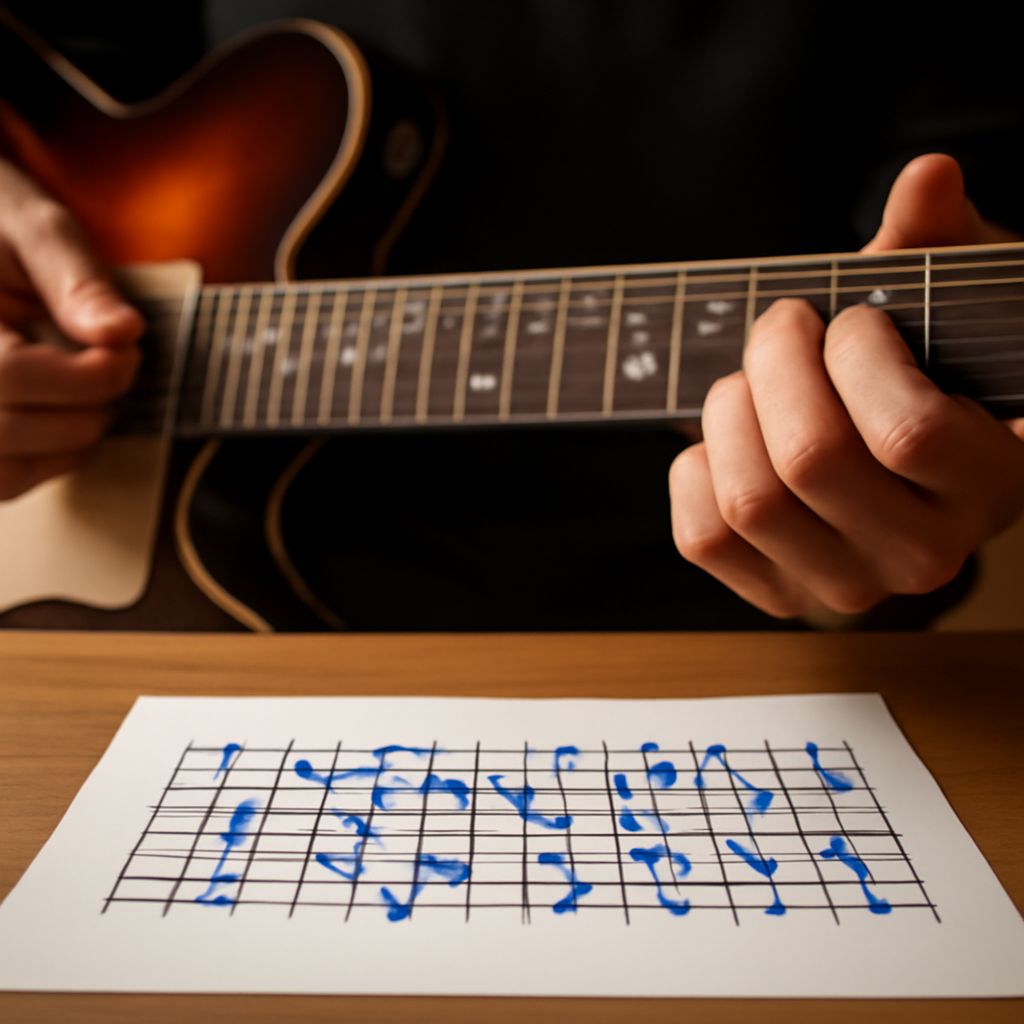
The harmonic minor scale offers a rich palette for musicians, bridging the gap between classical and modern sounds. By exploring the harmonic chords and the unique A minor harmonic scale, musicians can unlock new depths in their compositions and performances. This guide delves into the history, characteristics, and applications of harmonic minor scales, providing insights for those eager to weave this scale into their musical tapestry.
Introduction to harmonic minor scales
Understanding the basics
The harmonic minor scale is a seven-note scale that differs from the natural minor scale by raising the seventh note by a half step. This alteration creates a distinctive interval between the sixth and seventh notes, giving the scale its signature exotic sound. The A minor harmonic scale serves as a prime example, starting with the notes A, B, C, D, E, F, G♯, and A.
History and evolution
The harmonic minor scale has roots in classical music, emerging during a time when composers sought to expand the emotional range of their works. This scale allowed for more dramatic and poignant musical expressions, enabling the creation of complex harmonic chords that were not possible with the natural minor scale. Over time, its use has permeated various music genres, influencing the development of modern music.
Characteristics of the harmonic minor scale
Unique notes and intervals
The defining feature of the harmonic minor scale is its augmented second interval between the sixth and seventh degrees. This interval imbues the scale with an Eastern or Middle Eastern feel. When using the A minor harmonic scale, the transition from F to G♯ is a perfect demonstration of this unique characteristic.
Comparison with other scales Unlike the natural minor and major scales, the harmonic minor scale includes an augmented second interval, which is not present in the former. This gives it a distinct sound, often described as more mysterious or haunting. When compared to the melodic minor scale, the harmonic minor retains its raised seventh throughout, while the melodic minor raises both the sixth and seventh in its ascending form and lowers them in descending.
Applications of harmonic minor in music
Composing with harmonic chords
The harmonic minor scale is a valuable tool for composers looking to create tension and resolution in their pieces. By incorporating harmonic chords derived from this scale, musicians can craft progressions that intrigue listeners. The A minor harmonic scale, for example, allows for the creation of chords like the E7 or Bdim, which add depth and complexity.
Popular songs using harmonic minor scale
Numerous popular songs across various genres use the harmonic minor scale to enhance their musical narratives. From classical compositions to modern rock and pop hits, the scale’s exotic sound provides a unique flavor. Artists often leverage the A minor harmonic scale in particular, as it is familiar yet distinct enough to capture audiences’ attention.
Learning the a minor harmonic scale
Step-by-step guide
To master the A minor harmonic scale, begin by practicing its sequence: A, B, C, D, E, F, G♯, A. Focus on the transition between F and G♯, ensuring smooth and accurate intonation. Consistent practice will improve muscle memory and enable effortless navigation of the scale in compositions and improvisations.
Common challenges
One common challenge when learning the harmonic minor scale is adjusting to the augmented second interval. This can be particularly tricky for beginners unfamiliar with this type of leap. Additionally, integrating harmonic chords derived from the scale into compositions requires a solid understanding of harmonic theory and practice.
Exploring harmonic scales across genres
Classical music
In classical music, the harmonic minor scale is a staple for creating tension and drama. Composers like Bach and Beethoven have utilized this scale to evoke deep emotional responses from their audiences. The A minor harmonic scale, in particular, is frequently applied in classical compositions for its rich tonal quality.
Modern music
Modern music genres such as jazz, rock, and metal have embraced the harmonic minor scale for its versatility and unique sound. It is often used to add an exotic flair to solos and riffs. The scale’s distinctive intervals allow for creative exploration, making it a favorite among contemporary musicians looking to push musical boundaries.
Conclusion: Mastering harmonic minor scales
Practice tips
To truly master the harmonic minor scale, regular practice is essential. Focus on scales in different keys, paying close attention to the augmented second interval. Incorporate harmonic chords into your practice routine to solidify your understanding and application of the scale in various musical contexts.
Further resources
Numerous online tutorials and music theory books delve deeper into harmonic minor scales. Exploring these resources can provide additional insights and exercises to enhance one’s understanding and proficiency. Engaging with a community of musicians also offers opportunities for feedback and collaboration, further enriching the learning experience.
Pro tips recap: The harmonic minor scale is a powerful tool for musicians seeking to expand their compositional and performance repertoire. By understanding its unique intervals, practicing regularly, and applying it across genres, one can unlock new creative possibilities. Utilize available resources and community support to deepen your mastery of this intriguing scale.