Temperature measurements are a universal component of daily life and scientific study. Both the Celsius and Fahrenheit scales are commonly used, but converting between them can be confusing without clear guidance. Whether following international recipes, understanding weather forecasts, or studying scientific data, many encounter the need to convert Celsius to Fahrenheit efficiently. To make this process accessible, this article provides a detailed look at the conversion process, including the celsius to fahrenheit conversion formula, how to use a handy celsius to fahrenheit chart, and practical examples such as 20° celsius to fahrenheit for everyday reference. Readers will learn how to convert celsius to fahrenheit accurately and consistently.
This guide aims to clarify the relationship between these two temperature systems, highlight common pitfalls, and offer reliable tools and examples for quick conversion. By the end, readers will have gained a thorough understanding of converting Celsius to Fahrenheit, supported by both conceptual explanations and practical reference materials.
Understanding the celsius and fahrenheit temperature scales
The Celsius scale, also known as centigrade, is widely used around the world and in the scientific community. It defines the freezing point of water as 0°C and the boiling point as 100°C at standard atmospheric pressure. This scale is integral in weather reporting, academic research, and everyday measurements across countries using the metric system. Celsius is designed for simplicity, making it a logical choice for a wide range of applications.
In contrast, the Fahrenheit scale is primarily used in the United States and a few Caribbean nations. On this scale, water freezes at 32°F and boils at 212°F under standard conditions. The Fahrenheit system was developed in the early 18th century and, though less common globally, remains integral to American weather reports, cooking, and industry. Many find Fahrenheit useful for finer temperature gradations, especially when describing room or body temperatures.
Both scales measure the same physical quantity but use different reference points and intervals. Understanding these foundational differences is essential for accurate celsius to fahrenheit conversion. The variation in scale increments and zero points means that a simple one-to-one conversion is not possible, which is why a clear formula or reference chart is necessary for precise results.
In practice, accurately switching between Celsius and Fahrenheit is crucial for international communication, scientific calculations, and even travel. As global communication expands, so does the need to quickly and correctly convert temperatures. Knowing how to convert celsius to fahrenheit is a valuable skill for students, professionals, and anyone interacting with international standards.
How to convert celsius to fahrenheit: The basic formula
The standard formula provides a straightforward way to perform a celsius to fahrenheit conversion. The mathematical equation is:
- Fahrenheit (°F) = (Celsius (°C) × 9/5) + 32
This method multiplies the Celsius value by nine-fifths (or 1.8), then adds thirty-two to shift the scale to align with Fahrenheit’s starting point. For those needing a quick conversion, this equation is a reliable tool. Applying this method ensures an accurate transformation from Celsius into Fahrenheit, regardless of the temperature range.
When considering how to convert celsius to fahrenheit, it helps to break the process into two clear steps: first, multiply the Celsius number by 1.8 to scale it up, then add 32 to adjust for the Fahrenheit zero point. This stepwise approach minimizes mistakes and simplifies the calculation, whether done mentally, on paper, or with a calculator.
Many resources, such as online calculators or smartphone applications, are available for those seeking a more automated solution. However, understanding the basic formula enables users to double-check results and perform conversions without external tools. Some situations, like laboratory work or data analysis, demand high accuracy, so mastering this method is extremely valuable.
Mastery of the formula also helps in interpreting temperature-related content, such as scientific literature or international standards. In all these contexts, being familiar with celsius to fahrenheit conversion ensures that temperature information is always clear and actionable.
Practical examples: From 0° to 20° celsius to fahrenheit
Illustrating the conversion process with specific values reinforces conceptual understanding. For instance, converting 0° Celsius using the formula yields: (0 × 1.8) + 32 = 32°F. This demonstrates the well-known freezing point of water in Fahrenheit, widely referenced in weather and scientific discussions.
For a more moderate temperature, consider the conversion of 10° Celsius: (10 × 1.8) + 32 = 50°F. This example often appears in climate data and travel guides, as it represents cool but not freezing weather. Accurate transformation is particularly useful for travelers comparing forecasts or planning activities in regions using different temperature units.
A frequently referenced value is 20° celsius to fahrenheit. By applying the formula: (20 × 1.8) + 32 = 68°F. This result is common in home heating, ambient weather conditions, and many scientific protocols. Converting temperatures in this range is beneficial for understanding comfortable indoor environments or interpreting product specifications.
These sample calculations demonstrate effective use of the celsius to fahrenheit conversion method. Working through specific numbers, such as those found in recipes, technical documents, or educational materials, builds confidence and reduces uncertainty in practical scenarios.
Using a celsius to fahrenheit chart for quick reference
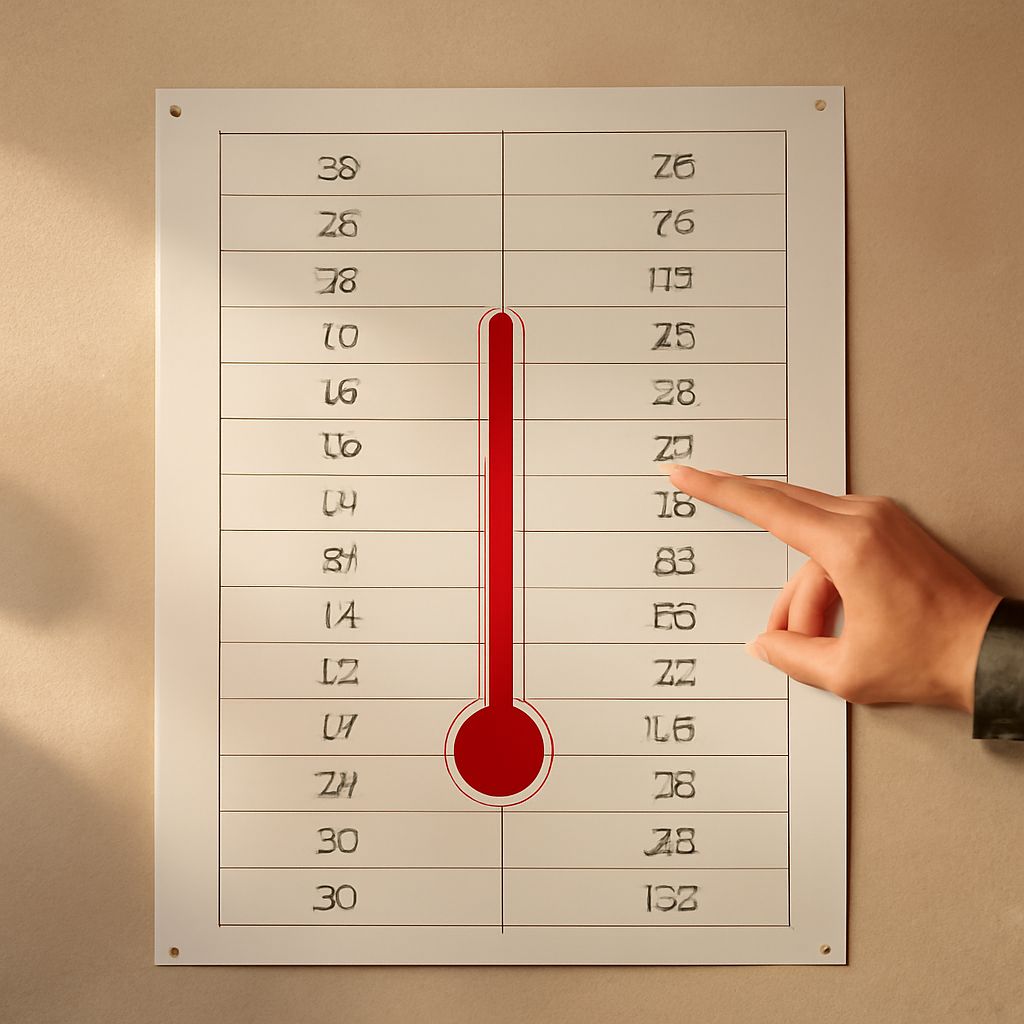
For fast and reliable conversion in everyday situations, using a celsius to fahrenheit chart is highly effective. Such a table lists a sequence of Celsius temperatures alongside their Fahrenheit equivalents. This approach eliminates the need for repeated calculation, allowing immediate access to accurate results, which is especially useful in fast-paced settings such as kitchens, classrooms, or laboratories.
Charts are particularly helpful for converting common temperature points, such as those used in weather reports or standard scientific procedures. For instance, a chart might show that 15°C equals 59°F, and 25°C equals 77°F. These reference tables are available in printed textbooks, wall posters, or digital formats for easy access during work or study.
Utilizing a chart streamlines the process of celsius to fahrenheit conversion and reduces the risk of computational errors. When accuracy is critical, such as in science education or technical fields, relying on a pre-calculated table ensures that temperature readings are interpreted correctly. This tool supports both quick checks and more detailed analysis when evaluating temperature-dependent processes.
Reference charts complement the mathematical formula, making it simple to verify results. Combining both methods—mental calculation and chart lookup—provides an extra layer of confidence in temperature conversion, supporting best practices in data interpretation and daily life.
Common mistakes in celsius to fahrenheit conversion and how to avoid them
Despite the simplicity of the standard formula, errors often occur during celsius to fahrenheit conversion. A frequent mistake is forgetting to add 32 at the end, which significantly underestimates the Fahrenheit value. Double-checking each step of the calculation—multiplying by 1.8, then adding 32—prevents such inaccuracies and ensures reliable results.
Another issue arises when individuals reverse the conversion direction, mistakenly applying the Fahrenheit-to-Celsius method. Distinguishing these two processes is essential, as using the wrong formula produces incorrect and potentially misleading temperatures. Carefully identifying which unit to convert from, and using the appropriate conversion method, is key in both academic and practical settings.
Misreading or misapplying a celsius to fahrenheit chart can also lead to errors. It is important to ensure that values are referenced from the correct column and that the chart is up to date and accurate. This is especially critical in scientific procedures or when working with sensitive temperature thresholds, where precise measurements are mandatory.
By consistently using the correct formula, cross-referencing with reliable charts, and reviewing calculations, users can avoid common pitfalls. These best practices support accurate temperature communication and foster confidence in both everyday and professional contexts.