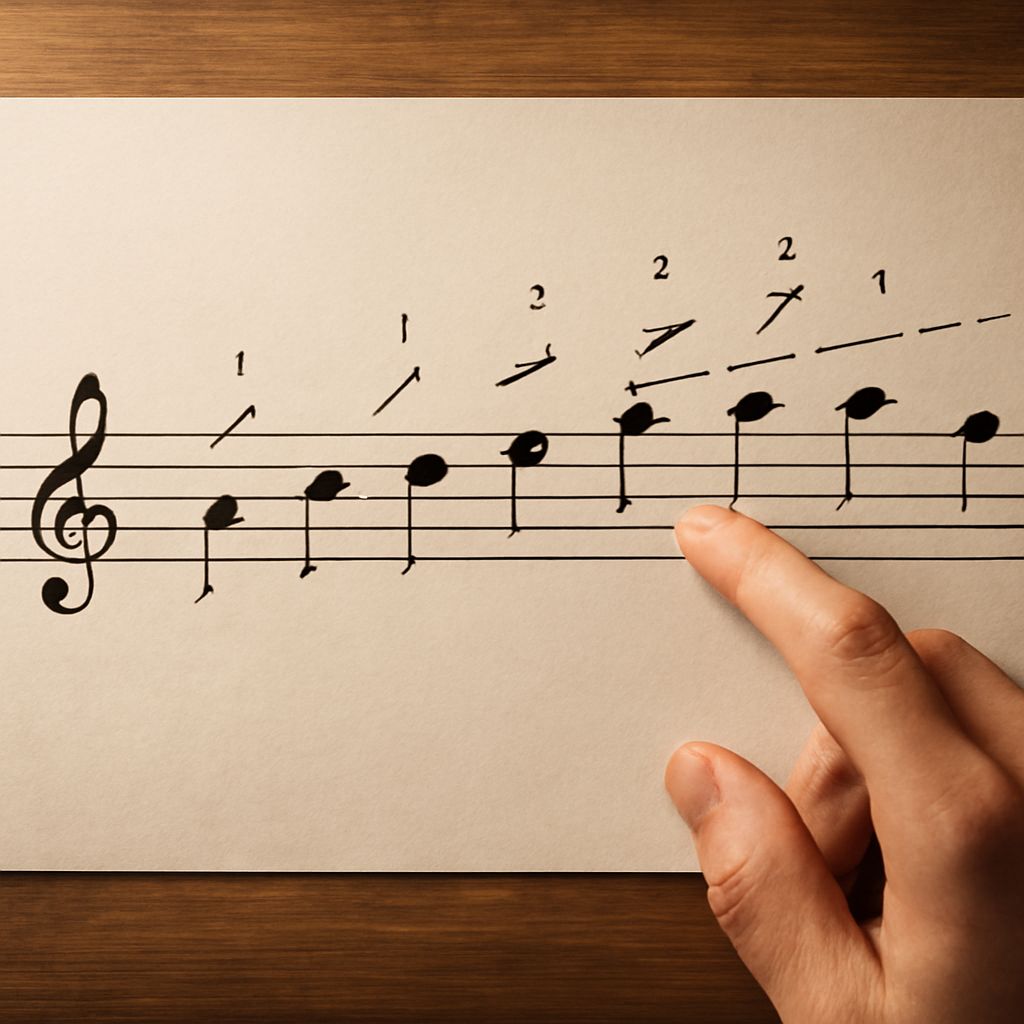
The natural minor scale serves as a foundational element within the world of music, offering both depth and versatility. Designed to evoke emotion and complexity, minor scales encompass a variety of types and structures. By exploring the natural minor scale formula, musicians can unearth a greater understanding of musical progressions and minor scale degrees, allowing for richer compositions and performances.
Introduction to Minor Scales
Minor scales are a pivotal component of music theory, providing a contrasting character to their major counterparts. They are commonly associated with melancholy and introspective moods, yet their application extends far beyond these emotional confines. Understanding the different types of minor scales is essential for musicians aiming to diversify their harmonic and melodic expressions.
These scales are constructed using specific patterns of whole and half steps, which define their unique sound. While the natural minor scale is often the starting point for many learners, delving into the subtle variations among minor scales can lead to a broader appreciation of music theory.
Exploring the Natural Minor Scale
The natural minor scale is recognized for its distinctive sequence of intervals, which produces a sound that many describe as pensive or somber. This scale differs from the major scale by having a flattened third, sixth, and seventh degree, thus altering its overall tonality.
Musicians often utilize the natural minor scale to craft pieces that convey depth and complexity. Its structure and pattern of intervals can be strategically leveraged to enhance musical storytelling, making it integral to compositions across various genres.
Different Types of Minor Scales
Beyond the natural minor scale, there are several other variations that musicians use to achieve specific tonal effects. The harmonic minor scale, for instance, introduces a raised seventh degree to create a leading tone, adding tension and resolution to musical phrases.
The melodic minor scale employs different ascending and descending patterns. Ascending, it raises both the sixth and seventh degrees, while descending, it returns to the natural minor scale form. These modifications enable composers to navigate musical phrases with greater flexibility and expression.
Understanding these types of minor scales and their applications is essential for musicians seeking to expand their creative repertoire and engage audiences with dynamic and varied compositions.
Understanding Minor Scale Degrees
Minor scale degrees form the backbone of how notes are perceived within a given scale. Each degree has a functional role, contributing to the scale’s overall mood and progression. For example, the tonic establishes the key center, while the dominant heightens tension and movement.
The natural minor scale degrees provide essential insights into how music is structured and how tension and resolution are achieved. Musicians can manipulate these degrees to craft intricate melodies and harmonies that resonate with listeners.
Recognizing the significance of each degree within a minor scale is pivotal for composers and performers who wish to harness the scale’s full potential in their musical endeavors.
The Natural Minor Scale Formula Explained
The natural minor scale formula is defined by a specific sequence of whole and half steps: whole, half, whole, whole, half, whole, whole. This arrangement sets the foundation for the scale’s melancholic and introspective qualities.
Applying the natural minor scale formula allows musicians to construct scales starting from any note, providing versatility in composition and improvisation. Understanding this formula is crucial for music theory learners, as it serves as a gateway to exploring other minor scales.
By mastering the natural minor scale formula, musicians can enhance their theoretical knowledge and practical skills, leading to greater sophistication in their musical creations.
Conclusion: Mastering the Minor Scales
A thorough understanding of minor scales, including the natural minor scale formula, is vital for any musician looking to broaden their expressive capabilities. Each type of minor scale offers unique characteristics and possibilities for musical storytelling.
Mastering these scales involves recognizing the subtle differences between them and understanding the role of minor scale degrees within compositions. This knowledge equips musicians with the tools necessary to create evocative and memorable pieces that captivate audiences.
Continual exploration and practice of these scales will not only enhance one’s musical proficiency but also deepen the appreciation for the intricate beauty that minor scales contribute to the musical landscape.