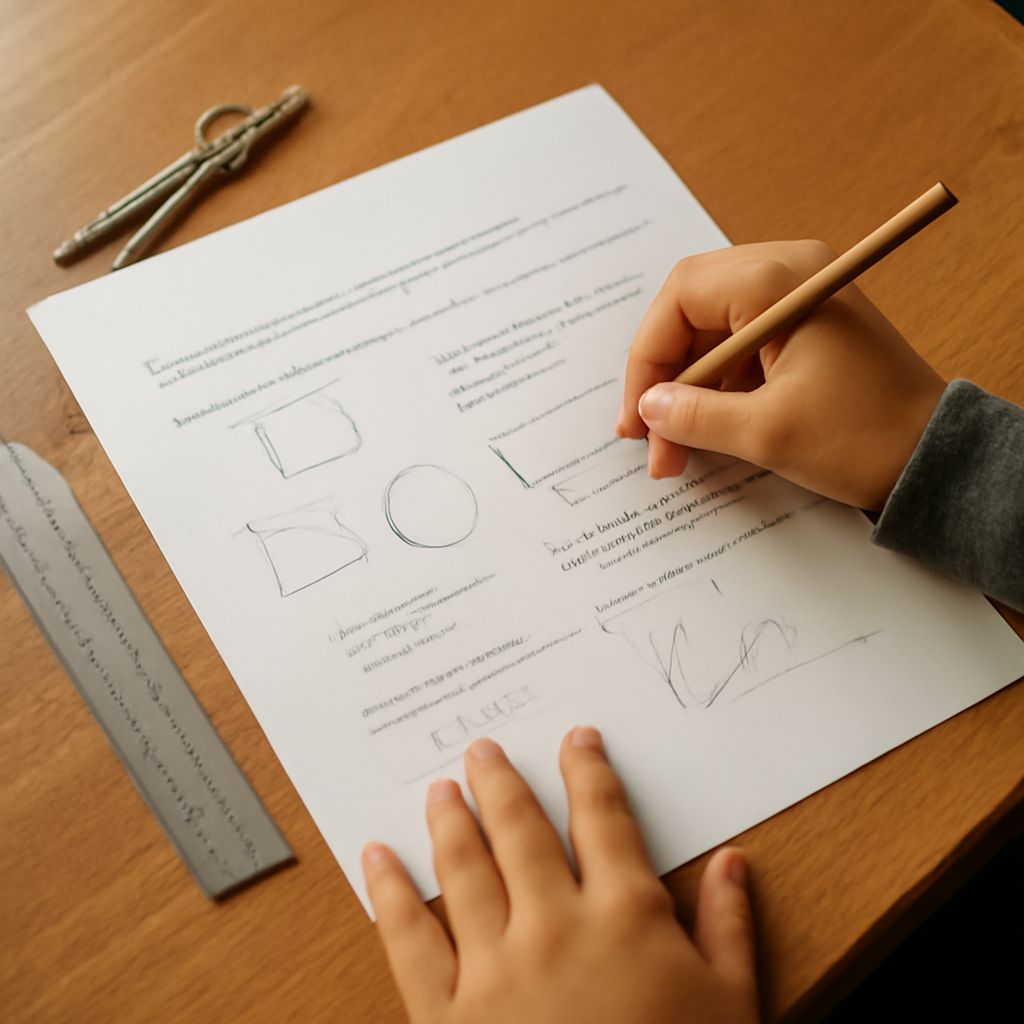
Geometry is a crucial component of the 9th-grade curriculum, providing students with foundational skills in geometric math. Mastering this subject is essential for success in advanced mathematics and various real-world applications. This comprehensive guide will help students excel by reviewing essential concepts, exploring effective study strategies, and addressing common challenges in 9th-grade geometry.
Introduction to geometric math
Geometric math encompasses the study of shapes, sizes, and the properties of space. It is a branch of mathematics that is both theoretical and practical, with applications in numerous fields such as architecture, engineering, and physics. Students in 9th grade will explore the essentials of geometric figures, develop problem-solving skills, and learn to apply geometric principles in various contexts.
Key concepts in 9th grade geometry
Understanding shapes and figures
In 9th-grade geometry, students begin by familiarizing themselves with basic shapes and figures such as triangles, circles, and polygons. Understanding these elements is crucial for grasping more complex concepts in geometric math. Students learn to identify and classify different shapes based on their properties, angles, and dimensions.
The importance of theorems and proofs
Theorems and proofs are central to 9th-grade geometry, providing a structured approach to solving geometric problems. By learning to construct proofs, students develop logical reasoning and critical thinking skills. Key theorems such as the Pythagorean theorem and properties of parallel lines with transversals are fundamental in building a solid geometric foundation.
Basic geometry formulas
Mastering basic geometry formulas is vital for success in geometric math. Students must become adept at using formulas to calculate area, perimeter, volume, and surface area. These formulas are essential tools for solving real-world problems and are frequently encountered in both academic and practical applications.
Effective geometry review strategies
Reviewing geometry effectively requires a combination of techniques tailored to individual learning styles. Regular practice is key, as it helps reinforce understanding and enhance problem-solving skills. Utilizing flashcards for memorizing formulas and theorems, and engaging with interactive tools like geometry software can make learning more engaging and effective.
Creating a geometry study guide
A personalized geometry study guide can be an invaluable resource for mastering 9th-grade geometric math. Organizing key concepts, theorems, and formulas into a single document allows students to review efficiently. Including visual aids such as diagrams and charts can help in visualizing complex shapes and relationships between different geometric elements.
Common challenges in 9th grade geometry
Tackling difficult problems
One common challenge in geometric math is solving difficult problems that require multiple steps and the application of various theorems. Breaking down problems into smaller, manageable parts and applying systematic problem-solving techniques can help students overcome these challenges.
Visualizing complex shapes
Visualizing complex geometric shapes is another challenge faced by students. Developing spatial reasoning skills through practice with 3D models and drawing exercises can significantly aid in understanding the intricacies of geometric figures. Engaging in activities that involve hands-on manipulation of shapes can also enhance comprehension.
Conclusion: Mastering geometric math
Mastering geometric math requires dedication, practice, and the use of effective study strategies. By understanding fundamental concepts, regularly reviewing materials, and developing a robust study guide, students can excel in 9th-grade geometry. Overcoming common challenges and applying learned skills in practical scenarios will not only improve performance but also foster a deeper appreciation for the beauty and utility of geometry.
Safety recap: While tools like geometry software can enhance learning, it is important to use them correctly to avoid misconceptions. Regular review and practice are essential for maintaining accuracy in geometric math.