The importance of understanding the preterite tense in Spanish cannot be overstated, especially when dealing with verbs like “dar.” The preterite of dar is an essential component of mastering this language. Whether you are learning Spanish for travel, work, or personal growth, knowing how to conjugate dar in the preterite will significantly enhance your communication skills. This guide will provide an in-depth analysis of the usage and conjugation of dar in the preterite, supported by practical examples and common usage scenarios.
Understanding the preterite tense
What is the preterite tense?
The preterite tense is one of the most commonly used past tenses in Spanish, employed to describe actions that have been completed in the past. This tense is crucial for narrating events with a clear beginning and end, thus offering precision when recounting past actions. Understanding the preterite tense is essential for anyone looking to achieve fluency in Spanish, as it forms the backbone of storytelling and historical narration.
Basic rules and uses of preterite
The preterite tense is typically used for actions that occurred at specific points in time or had a defined duration. The conjugation of verbs in this tense varies based on whether they are regular or irregular. Regular verbs follow a predictable pattern, while irregular verbs, like “dar,” require special attention due to their deviations from the norms. Correctly using the preterite tense involves recognizing these patterns and applying them appropriately.
Conjugation of dar in the preterite
Regular vs. irregular verbs
Spanish verbs are categorized into regular and irregular verbs. Regular verbs conform to standard conjugation patterns, while irregular verbs, such as “dar” in the preterite, do not. This distinction is vital for learners to understand as it affects how verbs are conjugated across different tenses. The preterite of dar is particularly notable for its irregular conjugation, which learners must memorize to use correctly.
How to conjugate dar in preterite
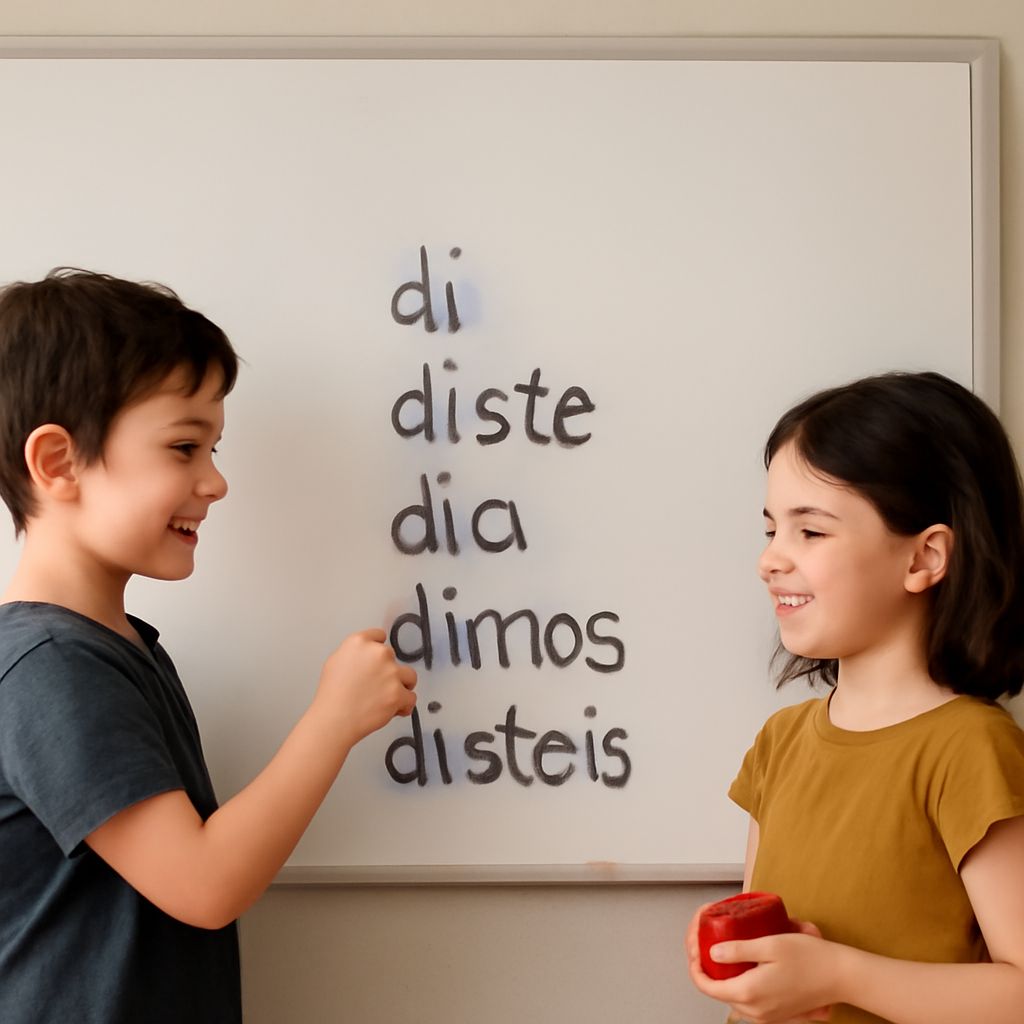
The conjugation of dar in the preterite is unique due to its irregular nature. This verb changes to “di” in the first person singular, “diste” in the second person singular, “dio” in the third person singular, “dimos” in the first person plural, “disteis” in the second person plural, and “dieron” in the third person plural. Mastering these conjugations is essential for effectively communicating actions that involve giving in past narratives.
Examples of dar in preterite
Common phrases using dar in the preterite
To effectively use the preterite of dar, it is helpful to practice with common phrases. Examples include “Yo di un regalo” (I gave a gift), “Él dio una charla” (He gave a talk), and “Ellos dieron una fiesta” (They threw a party). These phrases illustrate the practical application of the preterite tense in everyday conversations. Regularly practicing these examples will reinforce understanding and recall of the conjugations.
Tips for mastering the preterite dar
Mastering the preterite dar requires consistent practice and application. Incorporating the preterite of dar into daily language use can aid in solidifying one’s understanding. Additionally, engaging with media in Spanish, such as books or films that utilize this tense, can provide contextual learning opportunities. By actively seeking out these resources, learners can observe the nuances of the preterite tense in action.
Common mistakes with preterite dar
Avoiding common errors
Common mistakes with the preterite of dar often stem from confusion between regular and irregular patterns. Learners might incorrectly apply regular verb endings to irregular verbs or misuse the conjugation in terms of subject-verb agreement. It is crucial to internalize the specific conjugation patterns of irregular verbs to avoid such pitfalls. Frequent review and practice can help rectify these errors over time.
Practice exercises
Engaging in practice exercises can significantly enhance one’s competence in using the preterite of dar. Exercises might include filling in the blanks with the correct form of dar or translating sentences from English to Spanish. Such activities provide practical application and immediate feedback, facilitating improvement. Incorporating these exercises into a regular study routine will aid in cementing the conjugation patterns of dar in the preterite.