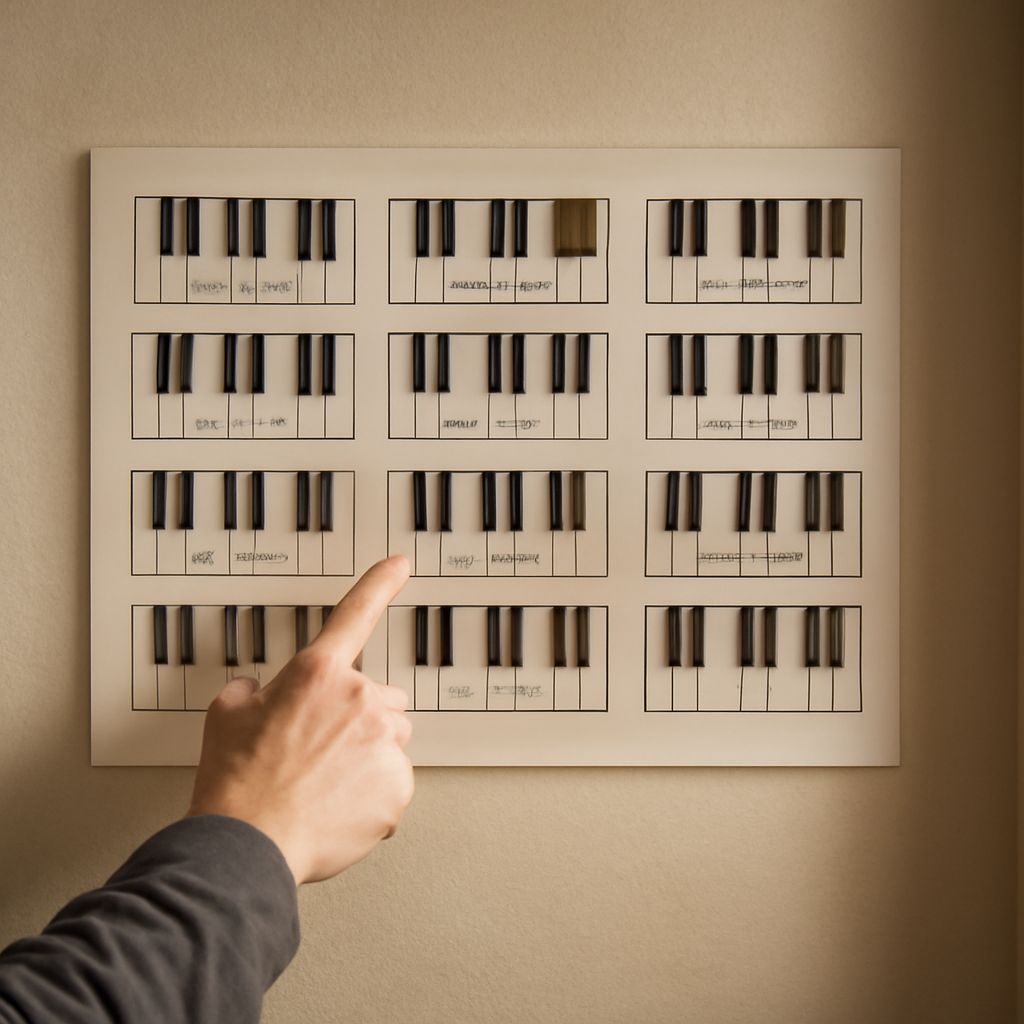
Music note names are fundamental to understanding the language of music. Different music notes hold the key to interpreting melodies and harmonies, while piano symbols provide a visual guide for performance. In this comprehensive guide, learners will decode the intricacies of these essential elements, laying a foundation for musical proficiency.
Introduction to music notes
Music notes form the building blocks of music, representing pitch and duration. They are the symbols on a staff that musicians read to play instruments or sing melodies. Every note has specific characteristics that dictate how music is played or sung, making it crucial for learners to grasp these basics to develop their musical skills effectively.
Understanding music note names
Music note names are standardized across different cultures and instruments. The Western music system uses a set of seven note names: A, B, C, D, E, F, and G. These names repeat cyclically, forming the musical alphabet. Understanding this cycle helps musicians identify pitches and build scales, which are essential for composition and performance.
Each note name corresponds to a specific pitch. For example, the note name “A” designates a specific frequency that musicians recognize globally. Recognizing these note names and their positions on the staff is vital for anyone learning to read music. These note names also help in understanding the tonal relationships between different music notes.
Exploring different music notes
Different music notes are distinguished by their durations and positions on the staff. Whole notes, half notes, quarter notes, and eighth notes are common types, each with a specific duration value. Combining these notes in various ways allows musicians to create rhythmic patterns and express musical ideas.
Beyond note duration, the position of notes on the staff indicates their pitch. Higher notes are positioned higher on the staff, while lower notes appear lower. Learning to differentiate these positions is key to reading and interpreting music effectively. Mastery of different music notes enriches a learner’s ability to perform and understand complex pieces.
Piano symbols and their significance
Piano symbols are an integral part of musical notation, providing cues for dynamics, articulation, and expression. These symbols include markings like forte (loud), piano (soft), staccato (short), and legato (smooth). Understanding these symbols is essential for pianists as they guide how a piece should be played beyond just the notes.
Piano symbols also include the use of clefs, such as the treble clef and bass clef, which indicate the pitch range of the notes on the staff. This is particularly important for pianists who often play music that spans several octaves. Familiarity with these symbols allows musicians to interpret music more accurately and perform with greater expressiveness.
Connecting music notes with piano symbols
The relationship between music notes and piano symbols is crucial for performance. Music note names inform the pianist of the pitches to play, while piano symbols instruct how to play them. This dual understanding enables musicians to bring compositions to life, aligning technical accuracy with musicality.
For instance, a piece might include different music notes such as quarter notes played forte, followed by softer eighth notes with staccato articulation. The combination of music note names and piano symbols informs the pianist not only what to play but how to convey the intended emotion and dynamic contrast.
Conclusion
In conclusion, music note names and piano symbols are indispensable tools in the study of music. By understanding different music notes and the significance of piano symbols, learners can enhance their musical literacy and interpret compositions with confidence. This knowledge serves as a foundation for more advanced musical endeavors.
Key takeaways: Mastering music note names and understanding piano symbols are essential for any musician. These elements collectively guide the technical and expressive aspects of musical performance.