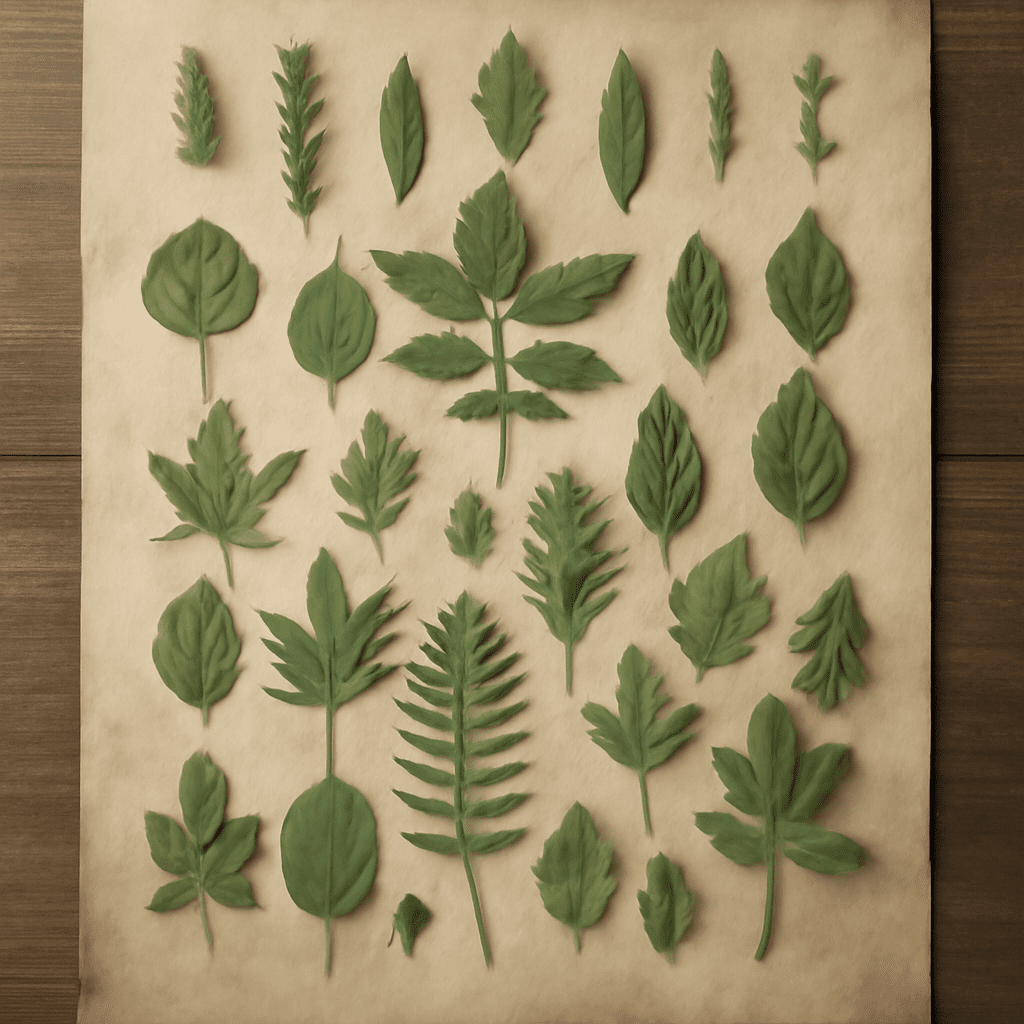
A leaf can narrow the search for a tree when its shape is read alongside its position on the twig, its edge, veins, and location. A chart for identifying leaves helps organize those observations. Different kinds of tree leaves can look alike, so a likely name should be checked against several features of the whole tree.
Start with a healthy, mature leaf still attached to a twig. Note whether it is broad, needle-like, or scale-like, then look at how it joins the stem. Record the location and take photographs before turning to a field guide. This sequence makes a comparison more reliable than choosing the closest picture from memory.
Leaf Identification Chart: Read the Clues Together
The following leaf identification chart groups common patterns, not definitive species diagnoses. Features can vary among species within a group, and unrelated trees can share a pattern. Use the last column to decide what to inspect next.
| Leaf pattern | Example group | Next clue to check |
|---|---|---|
| Simple, lobed, opposite | Many maples | Compare lobe shape and paired winged fruits. |
| Simple, lobed, alternate | Many oaks | Compare lobe tips, acorns, and local species descriptions. |
| Compound, opposite | Ashes | Count leaflets and compare buds and bark. |
| Simple, toothed, alternate | Elms and birches | Compare leaf bases, twigs, bark, and fruit. |
| Needles in bundles | Pines | Count needles per bundle and examine cones. |
| Individual needles | Spruces and firs | Examine how needles attach and compare cones. |
For tree leaves, chart comparisons offer useful starting points. For example, an opposite arrangement and a lobed blade may suggest maple, but the reader still needs to compare the fruit and other details with a regional guide. Boxelder is a maple with compound leaves, an example of why a group description cannot cover every member.
Start with the whole leaf
A simple leaf has one continuous blade, even if deep cuts divide it into lobes. A compound leaf has separate leaflets attached to a common leaf stalk. The distinction matters: a single leaflet of an ash can be mistaken for a complete leaf, making the arrangement on the branch look wrong.
Look for a bud where the whole leaf stalk meets the twig. Individual leaflets normally lack a bud at their bases. Oregon State University Extension illustrates the distinction and explains the main arrangements. Trace each stalk back to the woody twig before counting blades.
Broad leaves offer visible shapes: oval, heart-shaped, long and narrow, or lobed. Different tree leaves may share an outline while differing in their attachment or edge. Look at several undamaged examples, since young growth, shade, injury, and position on a tree can affect what one leaf looks like.
Needles and scales are leaves too. On a pine, needles grow in bundles; count the needles in more than one bundle. Spruce and fir needles attach individually, so their attachment and cones offer further evidence. These various kinds of leaves from trees require their own comparison. Record what is present rather than forcing a broadleaf term onto a conifer.
Follow the twig and the veins
At each node, the point where a leaf joins the stem, opposite leaves emerge in pairs across from one another. Alternate leaves emerge one per node, at successive positions along the twig. A whorl has three or more at a node. Inspect a length of twig: a missing leaf can make a pair look alternate.
This arrangement separates many types of leaves on trees before fine details come into play. The University of Minnesota Extension guide recommends combining arrangement with the leaf edge and other features. Photograph the twig from above and the side so that attachment points remain visible.
Veins add another clue. In a pinnate pattern, smaller veins branch from a prominent midrib, rather like the sides of a feather. In a palmate pattern, several major veins spread from near the base of the blade, like fingers from a hand. Hold the leaf toward the light or examine its underside. Veins can be faint; a photograph of both surfaces helps preserve the detail.
Inspect the edge and the setting
A smooth, or entire, margin has no teeth or deep divisions. A toothed margin has small points along the edge; a lobed margin has larger projections separated by indentations. Some leaves combine lobes and teeth. Compare the whole margin, including the base and tip, and check whether apparent cuts are insect damage.
The different types of tree leaves in a local park may include planted trees from far beyond the surrounding region. Location still matters: note the state, habitat, and whether the tree is in a maintained landscape or a natural woodland. A regional guide can narrow the candidates, but a street tree may fall outside a native-range list.
Season matters as well. Flowers, fruits, cones, and buds may be absent when the leaf is easiest to see. Record what is available and return later for another clue. Tree leaf types are easier to compare when seasonal evidence is kept with the original notes. Different types of leaves on a tree can also occur on the same plant: Minnesota Extension describes white mulberry leaves as sometimes unlobed and sometimes lobed. One unusual blade should therefore prompt a look at its neighbors.
Check a candidate against a reliable source
An identification chart for a leaf is most valuable when it leads to a fuller description. Search a university extension guide for the candidate and region, or use the NC State Extension Plant Toolbox, which provides plant profiles and identification terms. Compare the description of the twig, leaf arrangement, margin, fruit, and bark—not just the first photograph. A leaf identification reference chart may give terms that help interpret those descriptions.
Suppose a specimen has opposite, compound leaves. Ash is a reasonable candidate, but other trees have that combination. Compare leaflet number and shape, buds, and fruit with local descriptions; if they conflict, return to the key. A leaf ID chart cannot settle a name when essential features do not match.
A chart of tree leaves can also lead to a genus while leaving the species uncertain. That is a useful result: write down the competing names and the clue needed to distinguish them. A local extension office, arboretum, or trained botanist may be able to help when clear photographs and a location are available.
For a practical test, choose one accessible tree today. Photograph a complete leaf and its attachment to the twig, record its edge and veins, and compare those notes with a regional leaf identification guide. Keep the observations beside the candidate name so the conclusion can be checked again.