Understanding the various types of shapes is fundamental to mastering geometry. This comprehensive guide delves into every type of shape, offering insights into their forms, names, and characteristics. Through exploring a diverse list of shapes, one gains a deeper appreciation for the integral role they play in both academic and practical contexts. This investigation not only covers the most common shapes but also highlights unique and lesser-known ones, contributing to a well-rounded understanding of geometry.
Understanding the basic types of shapes
What defines a shape?
Shapes are defined as geometric figures or forms that are characterized by a specific boundary or surface. A shape can be two-dimensional, like a square or circle, or three-dimensional, like a cube or sphere. The types of shapes range from simple forms like triangles and rectangles to more complex ones such as hexagons and octagons. Understanding the basic types of shapes is crucial for identifying and categorizing different forms in geometry and everyday life.
The role of geometry in identifying shapes
Geometry is the field of mathematics that studies the properties and relations of points, lines, surfaces, and solids. It plays a pivotal role in identifying and analyzing the types of shapes. By exploring geometric principles, individuals can categorize shapes based on their sides, angles, and dimensions. The study of shapes and their properties allows for the development of spatial awareness and problem-solving skills, which are applicable in various disciplines.
Exploring the list of shapes and their names
Commonly known shapes
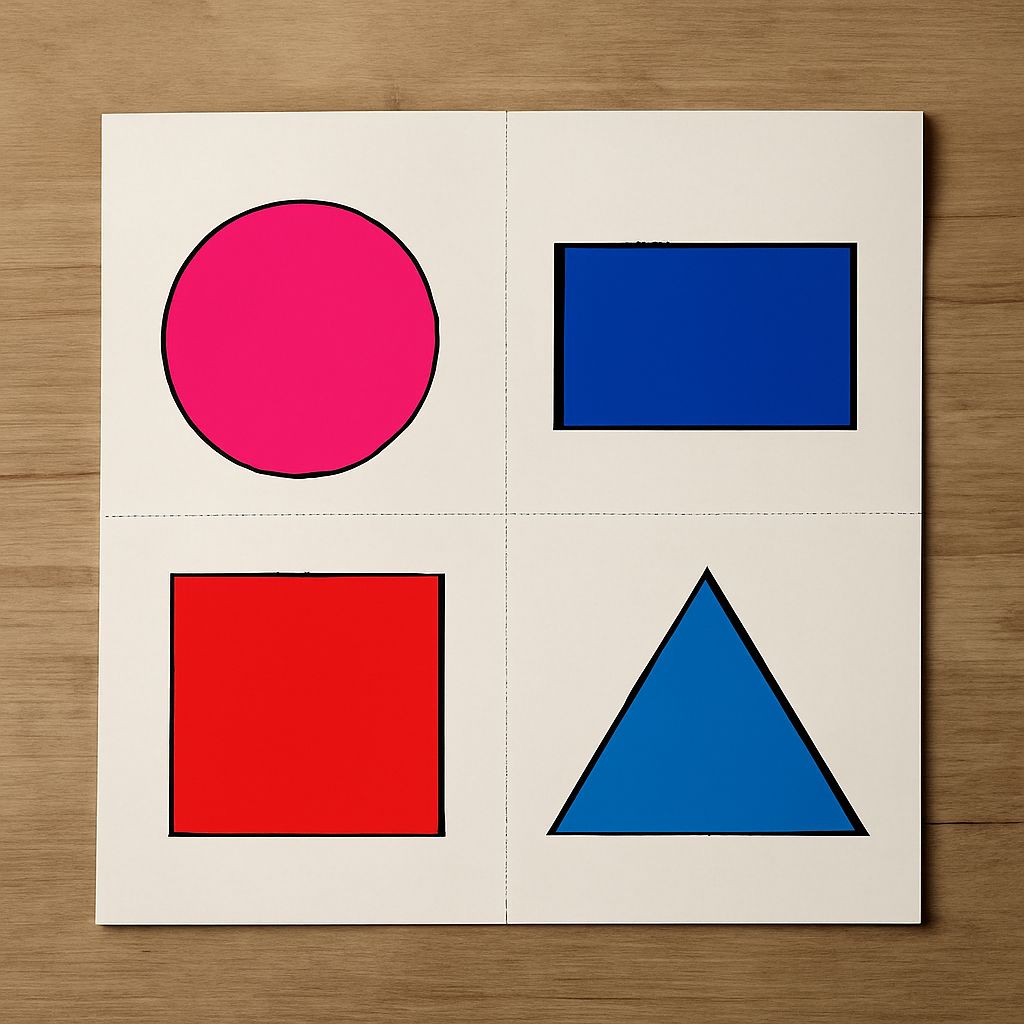
The list of shapes most commonly encountered includes basic geometric figures such as circles, squares, and triangles. Each shape has distinct properties: circles are defined by their roundness and lack of corners, squares by their equal sides and angles, and triangles by their three sides and angles. These shapes form the foundation for more complex forms and are essential in architectural, engineering, and artistic applications. Understanding these fundamental shapes is critical for recognizing patterns and structures.
Unique and lesser-known shape names
Beyond the basic list of shapes, there exists a variety of unique and lesser-known geometric forms. Shapes like the rhombicosidodecahedron or the truncated icosahedron, known for their complex structures, are often studied in advanced geometry and used in specialized fields such as crystallography and molecular biology. Recognizing these lesser-known shapes expands one’s geometrical vocabulary and enhances the ability to engage with diverse scientific and mathematical challenges.
A deep dive into all shape names
Historical origins of shape names
Many shape names have historical origins, often derived from Latin or Greek. For example, the term “polygon” comes from the Greek words “poly,” meaning many, and “gon,” meaning angles. These historical roots provide insight into the evolution of mathematical terminology and emphasize the long-standing significance of geometry in human thought. Investigating these origins offers a deeper understanding of how shapes have been perceived and utilized throughout history.
Cultural significance of different shapes
Shapes hold cultural significance across the world, symbolizing various concepts and values. In many cultures, circles represent unity and eternity, while triangles can symbolize strength or balance. Recognizing the cultural implications of different shapes allows for a more comprehensive understanding of their impact and meaning. This cultural awareness is vital for fields like architecture and design, where shapes are employed not only for their functional properties but also for their symbolic resonance.
Applications and significance of all shapes
How shapes are used in various fields
Shapes are utilized in a multitude of fields, each application leveraging the unique properties of different forms. In mathematics and physics, shapes are used to model and solve complex problems. In engineering, the structural integrity of designs often depends on the careful selection of appropriate shapes. Additionally, shapes are foundational in computer graphics and animation, where they are used to create realistic models and environments. Understanding the applications of shapes in these contexts underscores their versatility and importance.
The importance of shapes in art and design
In art and design, shapes are essential elements that contribute to aesthetic appeal and functional design. Artists and designers manipulate shapes to create visual interest, convey messages, and evoke emotions. The interplay of shapes can guide the viewer’s eye, establish harmony, or introduce tension within a composition. By mastering the use of shapes, artists and designers can enhance their creative expression and produce impactful works that resonate with audiences.
Next Steps: To further explore the types of shapes, individuals can engage in hands-on activities such as drawing, constructing models, or using digital design tools. Regular practice and application of geometric concepts will reinforce understanding and skill. Additionally, exploring literature on geometry and design can provide deeper insights into the intricate relationships between shapes and their applications across various disciplines.