In an emergency, call 911 if a phone connection is available. If a voice call is unsafe or impossible, try texting 911 and give the location and nature of the emergency. To attract attention when direct communication is unavailable, the Morse code pattern for SOS is three short signals, three long signals, then three short signals: … — ….
The SOS distress pattern in Morse can be sent with sound or light. Its steady rhythm helps a person distinguish a deliberate call for help from random noise or flashes. A demonstration teaches the sequence; an actual emergency also calls for the best available means of reaching responders.
SOS in Morse Code: The Pattern and Its Timing
The SOS Morse code consists of nine signals sent as one continuous group. The dots represent short signals, and the dashes represent long ones. The written spaces make the three groups easy to read, but the sender keeps the same short gap between every two signals in the group.
For a practice version of SOS in Morse code, choose a short signal lasting one beat. A long signal lasts three beats. Leave one beat of silence or darkness between individual signals, including those at the boundaries between the three groups. After the full nine-signal group, pause longer before repeating it; seven beats is a conventional word-length pause.
A slow practice count makes the proportions clear:
- Three short signals: one beat on, one beat off, repeated three times.
- Three long signals: three beats on, one beat off, repeated three times.
- Three short signals: one beat on, one beat off, repeated three times.
- After the last short signal, leave a longer pause before starting again.
The spaces shown on a page help the eye find the familiar letters S, O and S. In the distress call, however, the signals run together without the longer gaps normally used between letters. Keeping that distinction makes the Morse SOS rhythm easier to recognize. This SOS distress signal is sent as a single group.
Practice with sound or light
For a sound demonstration, tap a hard surface or use a whistle. Make each short tap brief and hold each long sound roughly three times as long. Let the sound stop between signals. A written guide to a Morse code SOS can show dots and dashes, but hearing the repeated group makes the difference in duration easier to grasp.
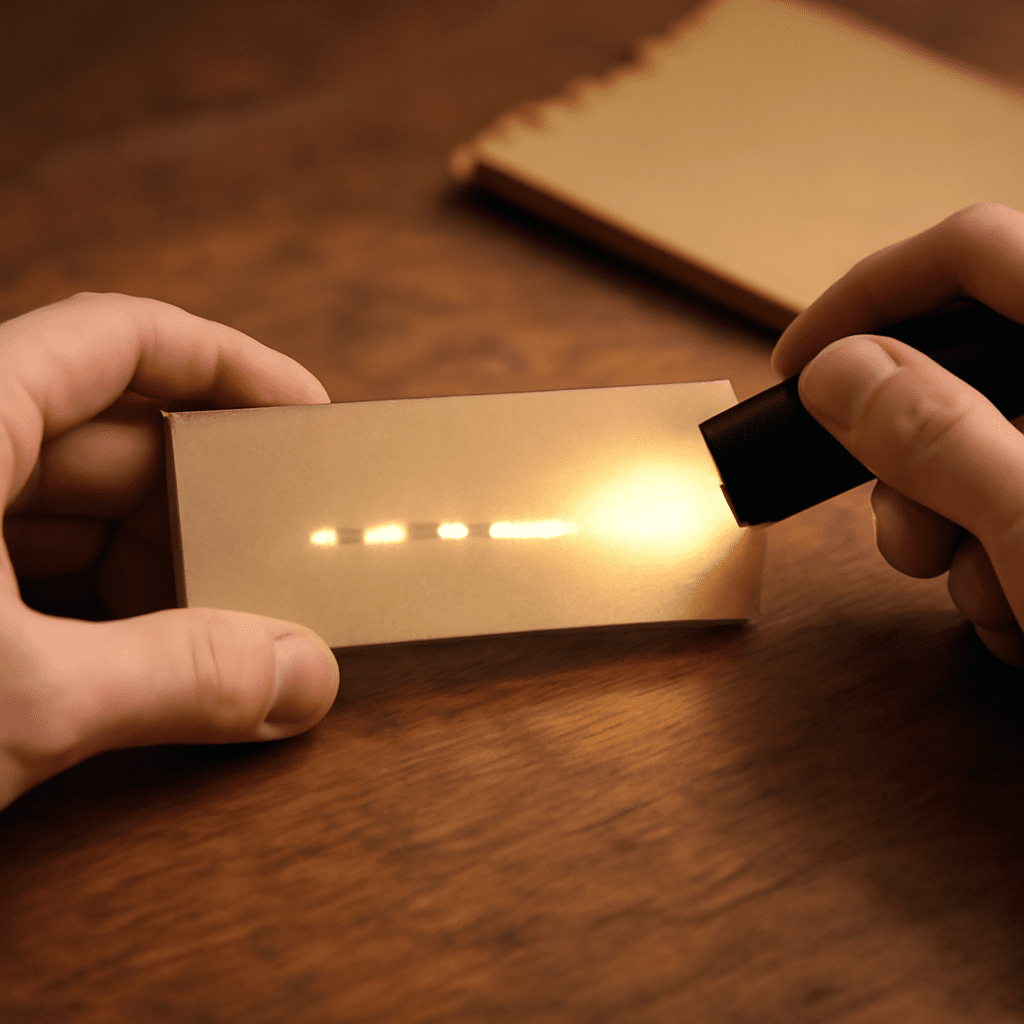
For light, switch a flashlight on for each signal and off for each gap. Three brief flashes, three longer flashes and three more brief flashes form the same SOS signal. A beam directed toward someone who might see it is more practical than flashes aimed at an empty patch of sky. Keep the light steady during each long flash instead of splitting it into shorter ones.
Practice at a comfortable speed with a partner who knows what to listen or look for. The partner can count the nine signals in the Morse code for SOS and check whether the long ones are clearly longer. Then switch roles. A phone timer or a metronome can establish a beat, but neither is necessary once the rhythm is clear.
For a classroom exercise, a simple example of the distress rhythm is a flashlight switched on for one second for each short signal and three seconds for each long signal, with one second of darkness between signals. The example is deliberately slow; the relative lengths matter more than using that particular speed. A clear SOS distress signal depends on those contrasts.
What the signal can and cannot communicate
What is Morse code for SOS? The Morse pattern that means SOS is the repeated distress group …—…, a request for urgent help. It does not identify the sender, explain an injury or provide a location. A person who sees or hears it must also recognize it and be able to act on it. Distance, terrain, background noise, daylight and obstructions can make a signal difficult to notice.
The SOS pattern gained its familiar form through maritime radio. The International Telecommunication Union notes that the 1906 International Radiotelegraph Conference established SOS as an international maritime distress signal. Today, a person with a working emergency communication device should use its appropriate emergency function or contact responders directly. A sequence of flashes is a way to draw attention when another person may be within sight.
If a signal appears to come from someone in distress, note its direction and any visible landmarks. Contact 911 and describe what was observed and where. Avoid entering a hazardous area to investigate; responders need a location and a clear account of the signs as much as possible.
Choose the strongest available route to help
In the United States, a person facing an immediate emergency should call 911 when possible, give the location first, explain what happened and follow the call-taker’s instructions. The location might be a street address, trail name, mile marker or recognizable landmark. A caller who does not know the exact address can describe surroundings and how they arrived.
According to 911.gov, calling is preferable when possible; texting is an option when a voice call cannot be made. Text-to-911 is not available everywhere, so watch for a bounce-back message and seek another way to contact help if the text is not delivered. A short message with the location and emergency gives a call-taker information that the distress group alone cannot convey.
Other equipment may offer a direct channel. On the water, the U.S. Coast Guard lists VHF-FM Channel 16 for emergency contact. Where an emergency beacon or a phone’s satellite emergency feature is available, use it according to its instructions and provide the requested details. Availability and operation depend on the device and conditions.
When a direct call cannot get through, repeated light or sound may attract a nearby person’s attention. Choose a position where the signal can be seen or heard without exposing anyone to additional danger, and conserve battery power and energy. If contact is established, communicate the location and immediate needs in plain language whenever possible.
Quick reminder
Remember three short, three long, three short, with short gaps throughout the group and a longer pause before repetition. In a real emergency, contact 911 or use an available emergency device, give the location and follow instructions. Use the rhythm to attract attention when someone may be able to notice it.